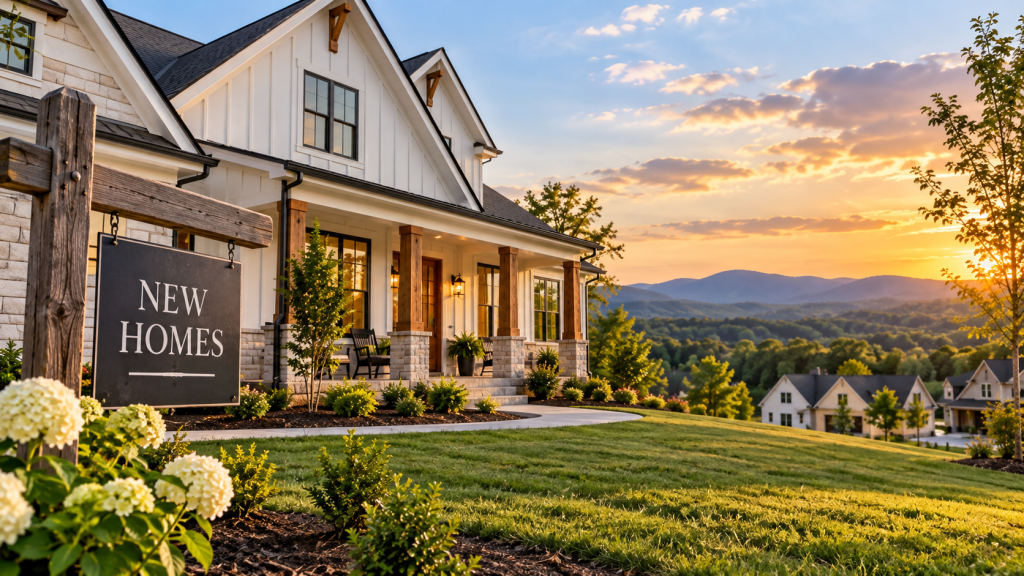
There is something very appealing about buying a brand-new house.
Nobody else’s mystery stains.
Nobody else’s questionable DIY electrical project.
Nobody standing in the kitchen saying:
“Well…that backsplash was a CHOICE.” 😂
You get new finishes, new systems and, depending on when you purchase, maybe even some opportunities to choose parts of the home yourself.
But buying new construction in Bartow County is not simply buying a resale home that happens to smell better.
The process can be very different.
And there’s one thing I want buyers to understand before they ever walk into a model home:
The nice person in the sales office works for the builder.
You can—and should—have someone looking out for you, too.
1. Start With the Location, Not the Model Home
Builders are very good at model homes.
Of course they are.
The lighting is perfect.
The furniture is perfect.
The kitchen is gorgeous.
Somehow there is never a pile of laundry anywhere. 😂
But before we fall in love with quartz countertops, let’s talk about the actual community.
How does the location work for your commute?
What’s nearby?
What is planned around the development?
How far are you from the places you use regularly?
Which utilities serve the property?
How does this particular part of Bartow County fit your everyday life?
You are buying the location AND the house.
The model home can distract you from that.
2. Research the Builder
Not every builder operates the same way.
Before making a decision, I want buyers learning about the company that’s actually constructing the home.
That can include researching things such as:
Experience and reputation
Warranty programs
Construction process
Communication
Standard features
Upgrade options
Previous communities
Buyer experiences
A beautiful floor plan tells us what the house might look like.
It doesn’t tell us everything about the experience of getting it built.
3. Know What’s Standard and What’s an Upgrade
Oh, the model-home trap. 😂
You walk through and think:
“THIS is what we get?!”
Maybe.
Or perhaps you’re looking at:
Upgraded flooring.
Upgraded countertops.
Upgraded cabinets.
Upgraded lighting.
Upgraded appliances.
Upgraded trim.
And approximately 47 other things with the word UPGRADE attached to them.
Before comparing the advertised base price with another home, understand what is actually included.
Ask for a clear list of standard features.
Then determine what your preferred upgrades would add to the price.
Because:
Base price and “the house I actually want” can be two very different numbers.
4. Builder Incentives Can Be Valuable—But Understand Them
Builders may offer incentives at different times.
Those could potentially involve things like closing-cost contributions, rate-related incentives, design-center credits or other promotions.
Some incentives may be connected to using a builder’s preferred lender, closing provider or other affiliated service.
That doesn’t automatically make an incentive good or bad.
It means we read the details.
Compare the complete financial picture rather than simply getting excited because a sign says:
$15,000 INCENTIVE!
Fifteen thousand toward what?
Under what conditions?
What alternatives do you have?
That’s the conversation.
5. Your Realtor Should Ideally Be Involved BEFORE You Register
This is a big one.
If you’re thinking about visiting new-construction communities, call me first.
Builder policies regarding buyer representation and Realtor registration can vary.
In some situations, your agent may need to accompany you or be properly registered with you from the beginning for the builder to recognize that representation.
So please don’t spend Saturday touring twelve model homes, fill out registration cards everywhere and then call me Sunday saying:
“Rachel! I found it!” 😂
I LOVE that you found it.
But I would much rather be involved before you start signing things.
6. The Builder’s Sales Representative Represents the Builder
The onsite sales representative can be incredibly knowledgeable and helpful.
But understand who they represent.
Their client is the builder.
Your Realtor represents your interests in the transaction, subject to the applicable agency relationship.
Those aren’t the same job.
This is not about turning the transaction into Buyer vs. Builder: Fight Night. 😂
It’s about making sure you understand the contract, process, deadlines and decisions from your side of the table.
7. Builder Contracts Can Be Different
New-construction contracts may differ significantly from the forms and terms buyers encounter when purchasing a resale home.
The builder may use its own contract documents.
Deadlines, deposits, financing requirements, construction timelines, change orders, warranties, inspections and other terms may work differently.
Do not assume the rules are identical because you’ve purchased a home before.
Read the contract.
Ask questions.
And if you need legal advice regarding the contract, that’s when we bring in the appropriate attorney.
8. Understand the Deposit Structure
With a resale home, you may be familiar with earnest money.
New construction can involve different deposit requirements depending on the builder and whether you’re buying a completed inventory home, a home already under construction or selecting a homesite and building from an earlier stage.
Upgrades or selections may also affect deposit requirements.
Before signing, understand:
How much money is required?
When is it due?
Under what circumstances could it be refundable—or not?
Don’t discover that part after you’ve already mentally ordered the patio furniture.
9. Construction Timelines Are Estimates Until They’re Not
If you’re buying a home that isn’t finished yet, you need a plan for timing.
Construction can be affected by weather, materials, inspections, labor, permitting and other factors.
That becomes especially important if you’re also:
Ending a lease.
Relocating.
Starting a new job.
Trying to coordinate movers.
Do not build a life-or-death moving plan around one estimated Tuesday six months from now. 😂
Have flexibility where possible.
10. Yes, I Still Want You Thinking About Inspections
Brand new does not mean:
Built by magical construction fairies who never make mistakes. 😂
A new home has never been lived in, but it has still been built by human beings.
Depending on the stage of construction and your contract, buyers may consider appropriate independent inspections or evaluations.
What inspections are permitted and when they may occur can depend on the builder and contract.
That’s something we investigate—not assume.
11. Ask About the Warranty Before You Need It
Many builders provide some type of warranty coverage, but terms vary.
Understand:
What is covered?
For how long?
Who handles warranty requests?
How are issues submitted?
Are different systems covered for different periods?
Keep your documents.
Future You will appreciate Current You tremendously.
12. Look Beyond the House at the Community
If you’re buying in a new development, you’re also buying into a community that may still be changing.
Ask questions about:
Future phases.
Amenities.
HOA requirements.
Common areas.
Roads.
Remaining construction.
Nearby development.
Lot premiums.
Potential additional homesites.
And remember:
The peaceful empty field beside the neighborhood is not automatically required to remain a peaceful empty field forever.
If surrounding development matters to you, investigate it.
13. Property Taxes on a New Home Need Special Attention
This one fits perfectly with the article we just wrote.
A tax record associated with vacant land or a partially completed property may not represent the future property-tax obligation once a completed home is assessed.
That’s why I don’t want buyers looking at an early tax figure and building their long-term budget around it without further investigation.
Ask your lender how taxes are being estimated for the projected payment, and verify relevant information with the appropriate taxing authorities.
14. New Construction vs. Resale Isn’t About Which One Is “Better”
We’ve already talked about this one in detail.
Some buyers love new construction.
Others walk into a mature neighborhood with huge trees and an older house full of character and immediately know that’s where they belong.
Neither is automatically better.
The question is:
Which fits YOU?
That’s why we’re not choosing a house based on what everybody on Facebook says you “should” buy.
A Front Porch Rachel Thought
I completely understand the excitement of new construction.
There’s something pretty amazing about being the first person to turn the key.
The first dinner in the kitchen.
The first Christmas.
The first nail you put in the wall and immediately hope your husband doesn’t notice is crooked. 😂
But I don’t want the shiny new house to make you forget the boring questions.
Ask about the builder.
Ask about the contract.
Ask about the incentives.
Ask about the timeline.
Ask about inspections.
Ask about taxes.
Ask about the neighborhood.
And please call me BEFORE you walk into the sales office.
Because whether the house is 80 years old or hasn’t even been built yet, my goal is the same:
Help you understand exactly what you’re buying before it becomes your front porch. ❤️
Real Estate. Real Life. Rachel.
This article provides general real estate information and is not legal, construction, inspection, lending, tax or warranty advice. Builder policies, contracts, incentives, warranties, timelines and buyer-representation requirements vary. Buyers should verify information with the builder and appropriate qualified professionals and obtain legal advice regarding contract terms when needed.


Leave a comment