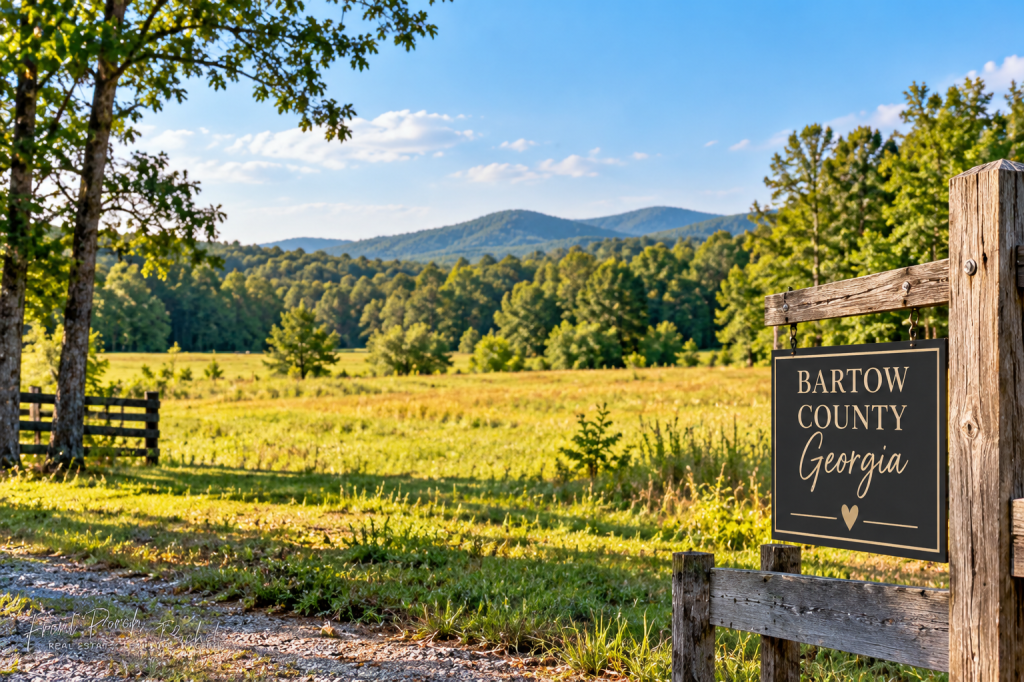
There’s something incredibly appealing about buying a piece of land in Bartow County and saying:
“We’ll just build exactly what we want.”
No outdated kitchen.
No weird bathroom tile.
No previous homeowner who apparently believed every room needed a different shade of beige. 😂
Just your land, your house and your plan.
But here’s the part I want buyers to understand:
Buying land to build on is NOT the same as buying a house that happens to sit on acreage.
That beautiful five-acre parcel may look absolutely perfect from the road.
But before you start mentally placing the front porch, we need to figure out whether you can actually build what you’re imagining there.
1. Start With What You Want to Build
Before we start searching for land, tell me the dream.
Are you thinking:
A traditional single-family home?
A barndominium?
A house with a detached workshop?
Room for an RV?
A small homestead?
Chickens?
Horses?
A pool someday?
A second structure for family?
Because when you’re buying land, we’re not simply asking:
“Do you like this property?”
We’re asking:
“Can this property support the life you’re planning?”
Those are very different questions.
2. Zoning and Property-Use Rules Matter
Finding land does not automatically mean you can do whatever you’d like with it.
Depending on the property’s location, zoning, recorded restrictions and other applicable requirements may affect how the property can be used.
Before buying, you may need to investigate questions such as:
What can be built here?
Are there minimum lot or setback requirements?
Are certain accessory structures permitted?
What rules could affect animals, RVs, workshops or additional buildings?
And please don’t rely on:
“The guy next door has one.”
That’s interesting information.
It is not the same thing as verifying what applies to your property. 😂
3. Does the Property Have Legal and Practical Access?
The fact that you can physically get to a piece of land doesn’t necessarily answer every access question.
Is there public-road frontage?
Is access provided by an easement?
Who maintains the road?
Could access affect construction equipment or future use?
If the property is tucked behind another parcel, access becomes something I want investigated carefully—not something we figure out when the concrete truck arrives.
4. Where Will Your Water Come From?
Depending on the property, water may come from a public or private utility, a well, or another approved source.
That means one of our early questions is:
“How are we getting water to this house?”
If a public connection is available, there may still be connection requirements and expenses to investigate.
If you’re considering a well, that’s an entirely different set of questions.
Land may look inexpensive until you start calculating what it takes to actually make it livable.
5. And Then There’s Septic
If public sewer isn’t available, the property may require an onsite wastewater system.
And this is where the pretty field needs to pass a few less glamorous tests. 😂
Suitability for a septic system can depend on site-specific conditions and applicable health-department requirements.
Before buying land with plans to build, you may need qualified professionals and the appropriate agencies to determine whether the site can support the system required for your intended home.
Because:
“We’ll figure out the septic later.”
is not my favorite land-buying strategy.
6. Utilities Aren’t Automatically Waiting at the Property Line
Electricity.
Internet.
Natural gas or propane options.
Water.
Sewer.
Trash service.
Cell coverage.
A rural property may require more investigation than a homesite inside an established neighborhood.
And here’s one I will continue screaming from my Front Porch Rachel rooftop:
VERIFY INTERNET AT THE EXACT ADDRESS.
If you work from home, stream everything, homeschool, game, run a business or have teenagers who believe losing Wi-Fi constitutes a humanitarian crisis…
We need to know what your options are. 😂
7. Don’t Assume the Entire Acreage Is Buildable
Five acres on paper does not necessarily mean five acres of equally usable land.
The property could contain steep terrain, drainage areas, flood-prone areas, easements, utility corridors, unusual boundaries or other site conditions.
That’s why acreage alone doesn’t tell the whole story.
Usable land matters.
And usable for your intended purpose matters even more.
8. Surveys Can Become Very Important
Vacant land doesn’t always come with obvious visual boundaries.
That fence?
Might not be the property line.
That driveway?
We need to know where it actually sits.
That gorgeous clearing you already decided will hold the house?
Let’s make sure it’s actually on the parcel you’re buying. 😂
Depending on the transaction and your plans, a current survey and other professional evaluations may be valuable.
9. Think About the Driveway Before the House
This sounds ridiculously basic until you stand on a beautiful piece of property and realize the ideal homesite is a very long way from the road.
Driveway construction can involve grading, drainage, culverts, permitting or other site work depending on the property.
And that’s before we even talk about getting construction vehicles in and out.
Your future front porch may be the fun part.
Getting TO the front porch counts too.
10. Site Preparation Can Change the Budget Quickly
The land purchase is only one part of the financial picture.
Depending on the property, building preparation could involve things like:
Clearing.
Grading.
Driveway installation.
Utility connections.
Well installation.
Septic installation.
Drainage work.
Surveys.
Engineering or other professional services.
Permits and fees.
That’s why a less-expensive parcel isn’t automatically the less-expensive place to build.
Sometimes the dirt is cheap because making the dirt useful isn’t.
11. Financing Land Can Be Different From Financing a House
Financing vacant land or combining a land purchase with future construction can work differently from obtaining a traditional mortgage on an existing home.
Loan availability, down-payment requirements, appraisal methods and construction financing can vary significantly.
So before we go fall in love with 14 acres and a creek…
Let’s talk to the lender. 😂
And specifically, let’s talk to a lender who understands the type of land and construction project you’re considering.
12. Don’t Skip the Professionals
Buying land can involve more than your Realtor and lender.
Depending on the property and your plans, you may also need information or evaluations from professionals or agencies involving:
Surveying.
Septic or soil/site suitability.
Utilities.
Zoning and planning.
Engineering.
Building.
Environmental or flood considerations.
Legal matters.
My job isn’t to pretend I’m all of those people.
My job is to help you recognize which questions need answers and help you navigate toward the right resources.
That’s a very important distinction.
Why Bartow County Land Buyers Need to Think Beyond the View
One of the reasons people are drawn to Bartow County is the variety.
You can find neighborhoods, established homes, rural roads, wooded acreage, open land and properties that feel worlds away from busier areas.
And that variety is exactly why land buyers need to investigate each parcel individually.
Two pieces of property a mile apart can present completely different considerations.
Never buy the dream without investigating the dirt underneath it.
A Front Porch Rachel Thought
I completely understand why people dream about buying land.
There’s something special about standing on an empty piece of property and imagining what could be there.
The house.
The workshop.
The garden.
The dogs running around.
The driveway everyone complains is too long.
And, obviously, the front porch. ❤️
But before you build the dream in your head, let’s make sure the property can support it in real life.
Because I don’t want to help you simply buy land in Bartow County.
I want to help you buy land that actually works for what you’re trying to build.
Real Estate. Real Life. Rachel.
This article provides general real estate information and is not legal, engineering, environmental, lending, surveying, zoning, building or septic advice. Property requirements and conditions vary by parcel and jurisdiction. Buyers should independently verify information important to their purchase with the appropriate governmental agencies and qualified licensed professionals.


Leave a comment