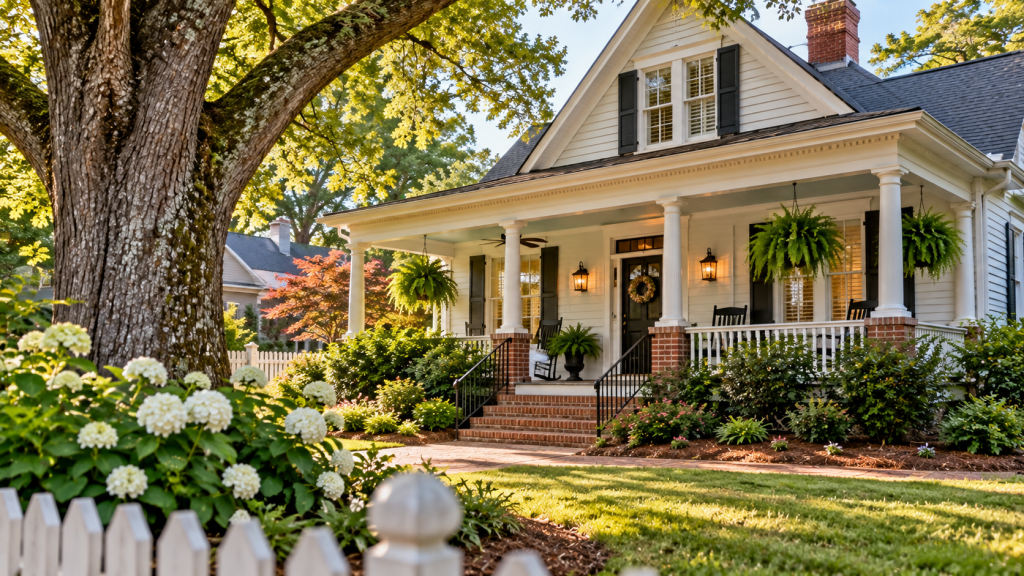
There is something about an older house.
The hardwood floors.
The big windows.
The mature trees.
The weird little built-in cabinet that serves absolutely no modern purpose but you immediately decide you cannot live without. 😂
Older homes can have incredible character—and here in Bartow County, buyers have opportunities to find homes from many different eras.
But when you’re considering an older home, I don’t want you comparing it to new construction and asking:
“Why isn’t everything new?”
Because that’s not the point.
The better question is:
“How has this house been maintained, and what am I actually buying?”
Let’s talk about what I want buyers paying attention to.
1. Age Isn’t Automatically a Red Flag
First, let’s get this out of the way.
Old does not equal bad.
A newer home can have problems.
An older home can be beautifully maintained.
The year on the tax record doesn’t tell us the entire story.
What matters much more is the property’s condition, maintenance history, improvements and systems.
I’ve walked into older homes that have clearly been loved for decades.
And I’ve walked into much newer homes and thought:
“What in the HGTV hell happened here?” 😂
Don’t judge the house by age alone.
2. Start With the Big Systems
That gorgeous original fireplace may steal your attention, but I also want to know about the less glamorous stuff.
Things like:
Roof
HVAC
Electrical
Plumbing
Water heater
Foundation or structural components
Windows
Drainage
The age of the house doesn’t necessarily tell us the age of those systems.
A 60-year-old home might have a relatively new roof, updated electrical and newer HVAC.
Or it may still have systems approaching the end of their expected useful lives.
That’s why we investigate.
3. Electrical Systems Deserve Attention
Electrical standards and common building practices have changed over time.
Depending on the home’s age and previous updates, an inspector or other qualified professional may identify components or conditions that deserve further evaluation.
And this is not where Rachel looks at the electrical panel and announces:
“Looks good to me!”
Absolutely not. 😂
This is where qualified professionals earn their money.
If something needs specialized evaluation, we bring in the appropriate expert.
4. Plumbing Can Tell a Story Too
Older homes may have undergone partial or complete plumbing updates—or none at all.
Different materials have been used during different periods of construction.
Buyers may want to understand:
What materials are present?
Have portions been replaced?
Are there signs of leaks or previous water damage?
How is the water pressure?
What is the condition of visible plumbing components?
Again, we’re gathering information.
Not declaring the house doomed because a pipe has a birthday.
5. Look Up—and Look Down
When you’re touring an older house, don’t spend the entire showing staring at the kitchen.
Look at ceilings.
Look around windows.
Look near baseboards.
Look in accessible lower areas.
Look outside around the foundation.
We’re watching for visible signs that could warrant further investigation—staining, cracking, moisture, drainage concerns or other conditions.
That doesn’t mean every crack equals:
“RUN FOR YOUR LIFE.” 😂
Houses move.
Materials age.
Repairs happen.
The goal is determining when something deserves a closer look.
6. Water Is Sneaky
If you’ve spent five minutes around real estate, you’ve probably heard people talk about:
Location. Location. Location.
With houses, I’d add:
Water. Water. Water.
How does water move around the property?
Are gutters functioning appropriately?
Where do downspouts discharge?
Does the lot slope toward or away from the house?
Are there signs of previous moisture intrusion?
Water can create expensive problems when it goes where it isn’t supposed to.
A beautiful historic-looking home under enormous mature trees can be dreamy.
I still want to know where the rain goes.
7. Mature Trees Are Gorgeous—And Still Need Attention
Speaking of trees…
One of my favorite things about established properties is mature landscaping.
You simply cannot manufacture a 50-year-old tree.
But large trees near a home can also deserve evaluation.
Look at proximity to the house.
Visible condition.
Branches over the roof.
Root areas.
Signs of damage.
I’m not suggesting you become an arborist during the showing.
Please don’t start diagnosing oak trees from Google while I’m unlocking the back door. 😂
But if something concerns you, a qualified professional can evaluate it.
8. Ask What Has Been Updated
When sellers provide information about improvements, pay attention.
When was the roof replaced?
HVAC?
Windows?
Electrical work?
Plumbing?
Kitchen?
Bathrooms?
Were additions made?
Was work permitted when required?
Are records or documentation available?
A house may be old while many of its major components are not.
That’s information worth knowing.
9. Additions and Renovations Deserve Questions
Older homes sometimes evolve.
A porch becomes a room.
A garage becomes living space.
A wall disappears.
An addition appears.
And sometimes you walk into a room and think:
“There is NO WAY this was always here.” 😂
If significant modifications have been made, buyers may want to investigate permits, workmanship, structural considerations and other relevant information with the appropriate professionals and agencies.
Pretty renovation does not automatically answer those questions.
10. Older Homes and Energy Efficiency
Older houses weren’t necessarily built with today’s energy-efficiency expectations.
Depending on the home and its updates, buyers may want to consider things such as:
Insulation.
Windows and doors.
HVAC efficiency.
Air sealing.
Appliances.
Utility history, when available and useful.
That gorgeous 1940s window may make your heart happy.
Your heating bill may have a separate opinion. 😂
Again, this doesn’t mean don’t buy the house.
It means understand the house.
11. If the Property Is Rural, We Add Another Layer
An older home outside a more developed area may also involve things like septic systems, private wells, propane or different utility arrangements.
We’ve already built a whole guide for that.
That’s exactly why our Bartow County content is starting to connect together instead of each article living on its own little island. 👏
12. Get the Inspection
I know.
Rachel has mentioned inspections approximately 9,482 times. 😂
I’m going to keep doing it.
A professional home inspection can help buyers better understand the condition of visible and accessible components of the property.
Depending on what is discovered, additional specialized evaluations may be appropriate.
Older house?
I especially want information.
Not because we’re looking for reasons to hate it.
Because if you love it, I want you to understand what loving it may involve.
13. Don’t Expect the Inspection Report to Be Short
An older house may produce a lengthy inspection report.
Take a breath.
Inspection reports can include everything from significant concerns to maintenance recommendations and relatively minor items.
We’re going to look at the whole picture.
What is serious?
What may need further evaluation?
What is routine maintenance?
What is simply old?
What matters to you?
A 67-page PDF does not automatically mean the house is falling down.
14. Budget for Homeownership, Not Just Closing Day
This applies to every house, but it’s worth emphasizing with an older property.
Even a well-maintained home requires future maintenance.
If several major components are older, think about what replacement could look like over the next several years.
The goal isn’t to predict every future expense.
That’s impossible.
It’s to avoid spending every dollar you have getting through the front door.
Your emergency fund would like to survive closing too. 😂
15. Character Has Value—But Don’t Let It Blind You
This might be my biggest advice.
You walk in.
Original hardwoods.
Beautiful fireplace.
Huge porch.
Mature trees.
And your brain immediately says:
“I WILL DIE IF SOMEONE ELSE BUYS THIS HOUSE.”
😂
I understand.
But we’re still inspecting it.
We’re still asking questions.
We’re still looking at the numbers.
We’re still evaluating the property.
Fall in love.
Just bring your brain with you.
Older Homes Are Part of What Makes Bartow Interesting
One of the things I enjoy about real estate here is that buyers aren’t choosing from one single type of housing.
Depending on where you’re looking in Bartow County, you may encounter established neighborhoods, older homes closer to historic areas, rural properties, newer subdivisions and brand-new construction.
And if you’re deciding whether an older home or something brand new fits you better:
That’s not a decision the internet gets to make for you.
A Front Porch Rachel Thought
New homes are beautiful.
But older homes?
Sometimes they have a feeling you simply can’t order from a design center.
Someone planted those trees decades ago.
Families have walked those floors.
There may be marks on a doorframe where somebody measured their kids.
And that slightly imperfect front porch has probably seen a whole lot of life. ❤️
I love that.
But loving the story of a house doesn’t mean ignoring its condition.
Respect the character.
Investigate the systems.
Understand the maintenance.
Then decide whether you’re ready to become the next chapter.
Real Estate. Real Life. Rachel.
This article provides general real estate information and is not inspection, structural, electrical, plumbing, environmental, legal or other professional advice. Property conditions vary. Buyers should obtain appropriate inspections and consult qualified professionals regarding conditions or concerns important to their purchase.


Leave a comment